
How Much Does a Bathroom Renovation Cost in Chichester?
A new bathroom sits on the wish list of almost every homeowner, yet it’s one of those projects that gets postponed year after year because the existing one still functions, just about. Then one morning you notice the grout has blackened beyond rescue, the sealant is peeling away from the bath, the taps drip regardless of how hard you turn them, and you finally accept that the room needs proper attention rather than another tube of silicone. When that moment arrives, the first question is always the same — how much is this going to cost?
The answer depends on the size of the room, the specification you choose, how much plumbing and structural work is involved, and whether you’re freshening up what’s there or starting from a blank canvas. This guide breaks down realistic bathroom renovation costs for homes across Chichester, explains what influences the price at each stage, and helps you plan a sensible budget before you start talking to builders.
What Does a Bathroom Renovation Actually Involve?
Understanding the full scope of work helps explain why costs vary so widely between projects. A bathroom renovation typically includes stripping out the old suite, sanitaryware, and wall and floor coverings. Plumbing work to connect the new suite and potentially reposition it if the layout is changing. Electrical work for lighting, extractor fans, heated towel rails, and possibly underfloor heating. Waterproofing wet areas to protect the walls and floor structure behind the tiles. Tiling on walls and floors. Plastering where surfaces need it. And finally all the finishing — sealant, accessories, mirrors, and the details that complete the room.
A straightforward suite swap in the existing layout touches some of these elements. A full strip-out with layout changes, new plumbing routes, and floor-to-ceiling tiling touches all of them. The scope of your project determines where you land on the cost spectrum.
Budget Bathroom Renovations: £3,000 to £5,000
At the entry level, a budget renovation covers a new suite, essential tiling, and straightforward fitting within the existing layout. The bath, basin, and toilet stay in their current positions, which means plumbing connections remain broadly where they are and the work is faster and simpler.
A standard white suite from a builder’s merchant or mid-range supplier costs between £400 and £800 for a bath, basin, toilet, and taps. Wall tiles for splash areas around the bath and basin plus floor tiles throughout add another £300 to £600 depending on the tile choice. Labour across plumbing, tiling, and any minor plastering or decoration typically falls between £2,000 and £3,500.
This approach suits rental properties, homes where the layout already works well and simply needs updating, or situations where keeping the cost down is the main priority. Many of the post-war properties across Chichester — in Parklands, Whyke, and East Chichester — have uncomplicated bathroom layouts that lend themselves to a practical like-for-like refresh without needing to reposition anything.
Mid-Range Bathroom Renovations: £5,000 to £10,000
This is where the majority of Chichester homeowners end up, and it delivers the best balance between quality and cost. A mid-range renovation typically involves a full strip-out back to bare walls, some layout refinement, a quality suite, generous tiling coverage, and a higher standard of finishing throughout.
The suite itself costs more at this level — between £800 and £2,000 for a bath or walk-in shower enclosure, wall-hung or close-coupled toilet, vanity basin unit with integrated storage, and quality taps and shower fittings. Vanity units are consistently popular because they hide pipework and provide useful storage in a room that never seems to have enough. Wall-hung toilets with concealed cisterns are increasingly common choices, creating a cleaner look and making floor cleaning noticeably easier.
Tiling costs rise with coverage and tile quality. Full-height tiling around the shower or bath area with half-height or feature tiling elsewhere, combined with floor tiles throughout, typically costs between £600 and £1,500 for materials. Large-format porcelain, patterned feature tiles, and natural-look finishes all sit comfortably within this budget.
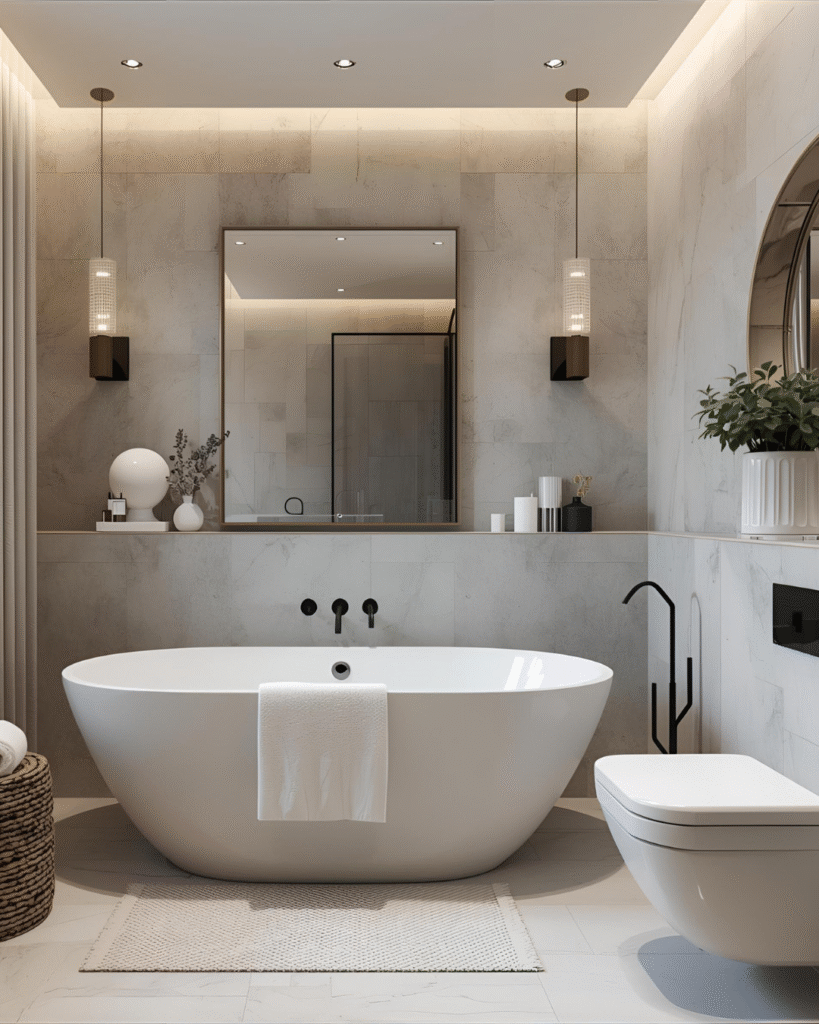
At this specification you might also include a heated towel rail in place of the old radiator, a proper extractor fan, recessed LED downlights, and finishing touches like a recessed shower niche, frameless glass screen, or illuminated mirror cabinet. These additions make the difference between a bathroom that’s simply new and one that genuinely feels considered and enjoyable to use.
Labour for a mid-range renovation typically runs between £3,000 and £6,000 across plumbing, tiling, electrical work, plastering, and decoration. The range depends on how involved the plumbing alterations are, how extensive the tiling coverage is, and the condition of what’s behind the existing tiles once they come off.
High-End Bathroom Renovations: £10,000 to £20,000+
At the premium end, a bathroom renovation becomes a design project in its own right. You’re specifying high-end sanitaryware, premium tiles, bespoke or fitted furniture, and finishes that transform the room into something you’d expect in an architectural magazine.
Suites from brands like Duravit, Villeroy and Boch, Crosswater, and Burlington cost significantly more — between £2,000 and £5,000 or higher for the complete package including freestanding baths, wall-hung furniture, and designer brassware. Large-format porcelain, natural stone, and handmade decorative tiles can cost £50 to £150 per square metre for materials before labour is factored in, and specialist tiles require more skill and time to lay properly.
High-end projects frequently include electric underfloor heating beneath the floor tiles, walk-in wet rooms with linear drains and full tanking, bespoke frameless glass screens cut to measure, integrated lighting design with LED niches and backlit mirrors, digital shower controls, and smart features like demisting pads and built-in speakers. Each element adds to the material and labour cost but contributes to a finished space that genuinely enhances daily life.
The structural work may be more extensive at this level too. Building a wet room requires the entire floor to be tanked and graded to a drain, which demands more preparation than a standard shower tray. Repositioning a toilet involves moving the soil pipe. Stud walls to conceal pipework and cisterns, floor level adjustments, and bespoke recessed storage all increase complexity and build time.
For larger properties in areas like Summersdale, Lavant, and Bosham, where bathrooms and ensuites tend to be more generous in size, a high-end renovation creates a space that adds real value to the property while transforming the daily experience of using it.
What Pushes the Cost Up or Down?
Beyond the specification you choose, several factors influence the final bill.
Room size is the most obvious variable. More floor area means more tiles, more plumbing, more labour, and more time. But smaller bathrooms are not always proportionally cheaper — the work is often fiddlier, access is restricted, and fitting everything into a tight space requires more precise planning and installation.
Layout changes add cost. Keeping everything in its current position means connecting to existing pipe runs with minimal alteration. Moving a basin to a different wall requires extending or rerouting supply and waste pipes. Repositioning a toilet is more involved because the soil pipe connection is larger and less flexible. Each individual change is manageable, but collectively they add meaningful labour and materials to the project.
The condition behind the existing tiles is a variable you can’t assess until the old coverings come off. Sound walls need minimal preparation before retiling. Blown plaster, damp damage, or crumbling surfaces — common in older Chichester properties where bathrooms have absorbed moisture over many years — need replastering or overboarding before new tiles can go on. An experienced builder builds an allowance for this into the quote rather than presenting it as an unexpected extra once the room is stripped.
The age of the existing plumbing plays a role too. If the supply pipes and waste connections are in reasonable condition, they can be reused. If they’re corroded, undersized, or made of lead, replacing them is necessary and adds to the plumbing element. Period properties around Chichester’s city centre, along Westgate, and in surrounding villages are more likely to need pipework upgrades than newer builds where the plumbing is already serviceable.
Access and property type affect the programme. A ground floor bathroom in a modern house is straightforward. A first floor bathroom in a Victorian terrace where materials need carrying up narrow stairs and waste routing needs careful planning through the existing structure takes longer and costs more.
Getting the Best Value from Your Budget
Plan thoroughly before any work starts. Choose your suite, tiles, taps, shower fittings, and accessories before your builder begins. Mid-project changes delay the programme, waste materials, and increase costs. The more decisions you finalise upfront, the smoother and more affordable the installation becomes.
Get detailed quotes specifying every element — strip-out, plumbing, waterproofing, tiling, electrics, plastering, decoration, and all materials and labour. A single figure with no breakdown tells you nothing and makes comparing quotes between builders impossible. Itemised quotes let you see exactly where your money goes and compare like with like.
Think about where to invest and where to economise. Quality taps, shower valves, and controls — the items your hands touch every single day — deserve a bigger share of the budget than tile upgrades beyond what looks good at a sensible price. A mid-range tile installed well always looks better than a premium tile installed poorly, so the quality of the fitting matters every bit as much as the quality of the material.
If you’re planning a bathroom renovation at your Chichester home, get in touch for a free consultation. We’ll discuss what you want to achieve, advise on the most practical approach for your space and budget, and provide a detailed quote covering every aspect of the project.